Amidst the explosive growth of artificial intelligence (AI), the greatest question humanity currently faces is this: Are we on the verge of entering an era where work is no longer a mandatory requirement for survival? Leading tech billionaires—such as Elon Musk, Bill Gates, Sam Altman, and Jensen Huang—are offering bold predictions that are simultaneously full of hope and laced with caution.
They believe that AI and robotics will usher in an “age of abundance,” yet one that also necessitates a massive transformation in social policy.
Elon Musk – The Strongest Advocate for a “Work-Free Paradise”
Elon Musk, CEO of Tesla and xAI, is the most optimistic of the group.
He predicts that within the next 10 to 20 years, work will become entirely optional—much like playing sports or video games.
AI and robots will generate such an abundance of goods and services that “money may cease to have any meaning.”
At the recent U.S.-Saudi Investment Forum, Musk asserted: “Work will be optional.
It’ll be like playing sports or a video game.” He terms this “sustainable abundance”—a state of enduring prosperity where robots attend to most human needs, ranging from healthcare to manufacturing.
Rather than the standard Universal Basic Income (UBI), Musk proposes a “Universal High Income”—a universal standard of high income funded by the immense productivity generated by AI—enabling everyone to live in a “penthouse” if they so desire, free from poverty or the anxiety of saving for retirement.
Musk emphasizes: “AI and robotics will enable everyone to enjoy an unprecedented standard of living.
This is the best path toward eradicating poverty.”
Bill Gates – Fewer Working Hours, Higher Quality of Life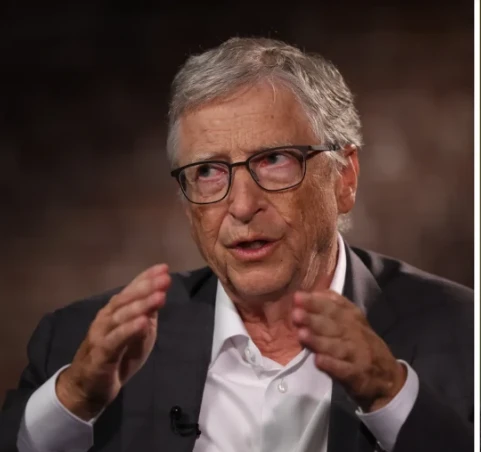
Bill Gates, co-founder of Microsoft, also maintains an optimistic outlook, albeit a more pragmatic one.
He predicts that within just the next 10 years, AI will replace humans in “almost everything,” leading to a workweek of only 2 to 3 days.
On *The Tonight Show Starring Jimmy Fallon*, Gates asked: “What will jobs be like? Should we just work like 2 or 3 days a week?” He believes AI will make healthcare, education, and manufacturing cheaper and more efficient, freeing up human time to spend on family, creativity, and personal interesTS. Gates does not view unemployment as a disaster, but rather as an opportunity for society to restructure its workforce.
Sam Altman—From UBI to Sharing AI Benefits
Sam Altman, CEO of OpenAI, was once a staunch advocate of Universal Basic Income (UBI).
He personally spent $14 million and supported a total of $60 million in experiments involving monthly cash payments to low-income individuals.
However, by 2026, Altman had shifted his perspective.
In an interview with *The Atlantic*, he stated: “I no longer believe in universal basic income as much as I once did.” Altman argues that a fixed cash stipend is insufficient for the era of the AI boom.
Instead, he proposes a model of collective benefit-sharing: everyone would own a share of AI resources—whether in the form of computing power, equity stakes, or tokens—to collectively benefit from the massive economic growth generated by the technology.
This approach aims to create “universal extreme wealth” rather than merely providing a basic subsidy.
Jensen Huang and a Balanced Perspective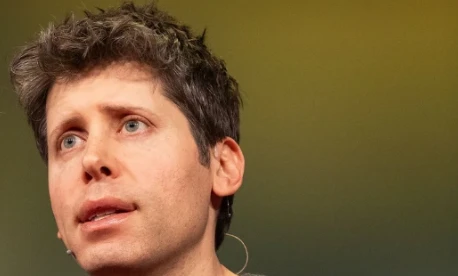
Jensen Huang, CEO of NVIDIA, emphasizes the positive side: AI does not destroy jobs, but rather creates a multitude of new ones.
He contends that AI will help the United States re-industrialize and that “AI creates jobs.” Professions requiring creativity and complex judgment will continue to require human input, while AI serves to boost productivity.
However, Huang also acknowledges that certain repetitive tasks will indeed disappear, and that individuals must learn how to collaborate with AI to avoid being replaced.
Challenges and Opportunities
AI leaders agree: A future where one “does not need to work to live” is a highly probable scenario, promising unprecedented prosperity.
However, they also warn of massive transitional unemployment, potential inequality should the benefits of AI become concentrated in the hands of a few, and the urgent need for bold policy changes—including AI taxation, public funds, workforce retraining, and shorter workweeks.
This is not a 100% certain outcome; yet, if technology continues to advance at its current pace, humanity will face a historic choice: Will AI become a “paradise” or a source of instability?
Conclusion